Electrical Outlet Not Working: Safe Troubleshooting
Use this safe dead outlet troubleshooting guide to check GFCIs, breakers, heat, damage, and warning signs before calling a licensed electrician for help.
Articles on this site may include sponsored content. If they do, it's labeled clearly - and it still has to answer a real homeowner question. Same bar as everything else here.
Dead Outlet Troubleshooting for Homeowners
Most homeowners do not need trade jargon. They need a calm way to understand what is happening, what details to collect, and what decisions are safe to make before they call someone.
Here is how to think through a dead outlet in plain language. Use it to organize your notes, ask better questions, and avoid making a rushed decision from a single quote or a single symptom.
A non-working outlet is rarely a mystery once you know what to look for. Most causes fall into a few categories: a tripped GFCI, a loose connection, a broken receptacle, or a problem upstream in the circuit. We will go through each one, starting with the safest and simplest checks.
Safety note up front: Electricity carries serious shock and fire risk. Stick to visual checks and simple resets. Anything involving exposed wiring, removing a receptacle, or working inside a panel should be done by a qualified pro. If at any point you feel unsure, stop and call a licensed electrician.
The quick answer
Start with what you can observe without taking anything apart. Look for timing, location, recent changes, visible damage, smells, sounds, and whether the problem is isolated or happening in more than one place.
Most non-working outlets have one of these causes:
- A tripped GFCI outlet or breaker. The most common reason. One GFCI outlet can protect several regular outlets downstream. If it has tripped, all the outlets after it on that circuit will also be dead.
- A loose or backstabbed wire. Wires pushed into the back of an outlet instead of wrapped around the screw terminals can loosen over time.
- A failed receptacle. Outlets wear out. The internal contacts lose tension after years of use.
- A tripped or faulty breaker. The breaker may have tripped without you noticing, or it may have failed internally while still showing ON.
If the issue involves active water, heat, smoke, electrical burning smells, or repeated failures, stop troubleshooting and call a licensed electrician immediately. Safety comes first.
What to check first
Write down when the problem started, what changed before it started, and whether it is getting better, worse, or staying the same. Photos and short videos give the pro context before a visit.
For outlet questions, separate symptoms from guesses. A symptom is something you can see or measure. A guess is the cause you suspect. Good decisions start with symptoms first.
Symptom checklist
- Is just one outlet dead, or several? Plug a lamp you know works into the dead outlet, then try it in other outlets in the same room and nearby rooms. If multiple outlets are out, the problem is likely upstream.
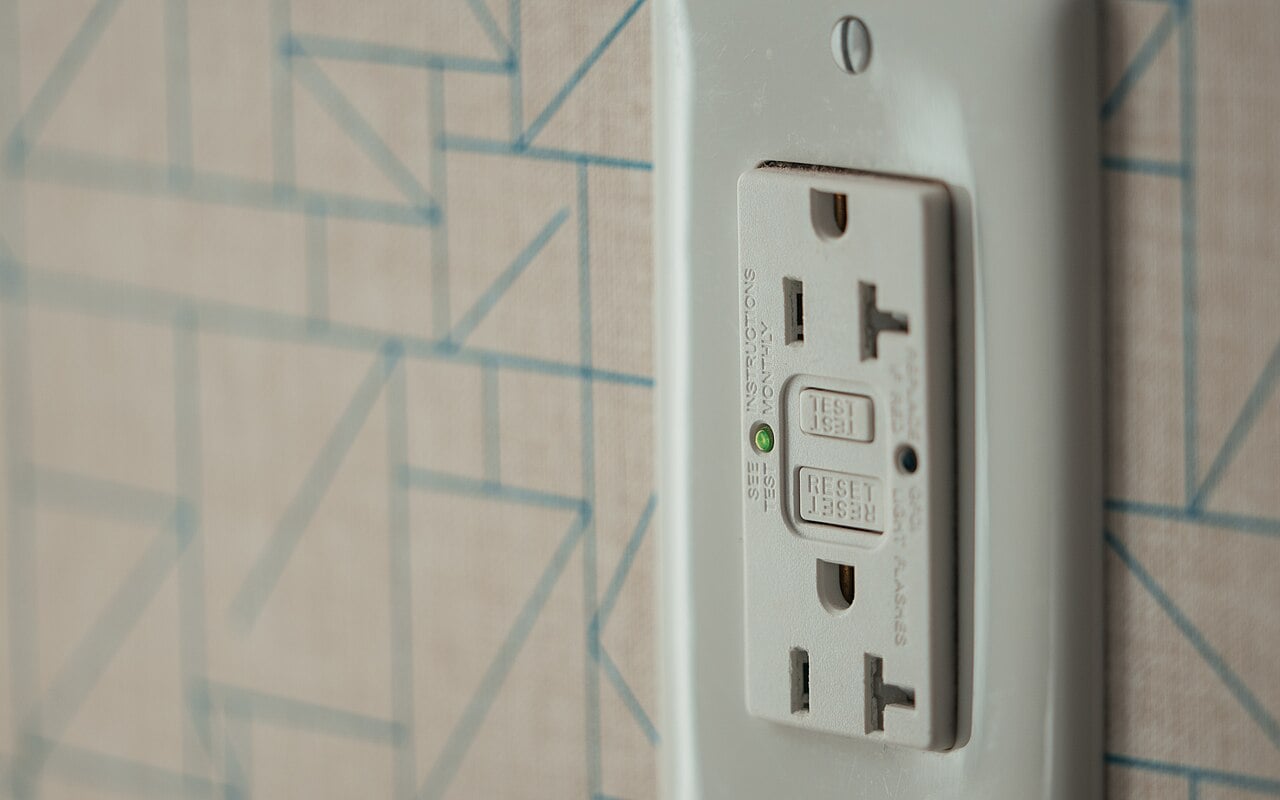
- Do any outlets have Test and Reset buttons? Check every GFCI in the house, not just the one in the room with the dead outlet. A GFCI in the garage can protect outlets in an upstairs bathroom.
- Did anything change recently? A new appliance, recent work, a storm, or flickering lights before the outlet stopped. Recent changes are often the clue.
- Does the outlet look damaged? Discoloration, burn marks, cracks, or a plug that feels loose means the receptacle needs replacement.
- Is there a smell? A fishy or metallic smell near an outlet means overheating or arcing. Do not use it. Call an electrician.
- Is the outlet warm to the touch? Use the back of your hand. Heat means resistance, which means a loose connection and a fire risk.
Safety around live wires
Live wires carry 120 volts, enough to cause serious injury or death under the right conditions.
- Never stick anything into an outlet except a plug. Keys and screwdrivers are a fast way to get shocked.
- Never work on an outlet while it is live. Turn off the breaker first and confirm with a voltage tester.
- GFCI outlets can lie. The incoming wires can still be live even when the Reset button is popped out.
- Water and electricity do not mix. Do not touch outlets with wet hands or stand on a wet floor.
- Do not remove the faceplate unless the power is confirmed off. Once the faceplate is off, the screw terminals and wire connections on the sides are exposed.
If you are not comfortable with any of these precautions, stop here and call an electrician.
GFCI resets: the most common fix
Find every GFCI outlet in your home and check each one. This alone solves more dead outlet problems than any other step.
GFCI outlets have Test and Reset buttons. If the Reset button is popped out or does not sit flush, press it firmly until it clicks in.
One GFCI protects multiple outlets. A GFCI in one room can protect regular outlets in several other rooms. Even if a GFCI looks normal, press Reset anyway. Sometimes the button looks fine but is not making contact.
If a GFCI trips again immediately after resetting, do not keep resetting it. That means a ground fault somewhere on the circuit: a damaged cord, moisture, or a failing appliance. Call an electrician.
Where to find GFCI outlets: Bathrooms, kitchens (countertops), garages, basements (unfinished), outdoors, crawl spaces, and laundry rooms near utility sinks.
Checking the breaker panel
If resetting GFCIs did not fix it, check the breaker panel. Open the door (not the dead front cover) and look for any breaker that is in the TRIP or OFF position, or sitting between ON and OFF. A tripped breaker usually sits slightly past OFF.
To reset: push the breaker firmly to full OFF, then firmly to full ON. You should feel a solid click.
If the breaker trips again immediately or within a few minutes, do not keep resetting it. That signals a short circuit, a ground fault, or a failing breaker. Call an electrician.
What if no breaker is tripped? A breaker can fail in the ON position. The handle says ON but no power is coming out. Rare but possible. An electrician can test with a multimeter. If GFCIs are all reset and no breaker is tripped, the problem is likely a broken receptacle, a loose wire, or a failed breaker.
Loose connections and backstabbed wires
This is the most common cause when GFCIs are reset and no breaker is tripped.
Outlets have two attachment methods: screw terminals (wire wraps around a screw, more reliable) and backstab connections (wire pushed into a spring clip, faster but loosens over time). Backstabbed connections loosen after years of thermal expansion and contraction, creating resistance and heat until the outlet fails.
Signs of a loose connection: Gradual failure, warm faceplate, works when wiggled, faint burning smell.
If you suspect a loose connection, call an electrician. Fixing it requires turning off the breaker, removing the outlet, inspecting the wires, and properly terminating them, typically cutting off the end, stripping fresh copper, and wrapping around the screw terminals.
Broken or worn-out receptacles
Outlets are mechanical devices. The metal contacts inside are designed to grip a plug’s prongs with pressure. After hundreds or thousands of insertion cycles, those contacts fatigue.
When contacts lose tension, a plug does not make solid contact. The outlet may work intermittently or not at all. A lamp works when you hold the plug at an angle but goes dark when you let go.
This means the receptacle needs replacing. It cannot be repaired, only swapped out. An electrician can usually do this in 15-30 minutes per outlet. Most outlets are rated for about 10,000 to 25,000 insertion cycles. In high-use locations like a kitchen counter, that adds up fast.
When an outlet half-works
One plug works, the other does not. This almost always means the outlet itself has failed. Standard duplex outlets have two sets of internal contacts. If one side fails, replace the receptacle.
Dim glow or low voltage. If a device barely lights up, you may have a loose neutral connection (the white wire that carries return current). This is a serious safety issue. Loose neutrals cause overheating and can damage electronics. Call an electrician.
Outlet works only with certain plugs. Try the non-working device in a known-good outlet. If it still does not work, the device is the problem. If it works in the good outlet but not the problem outlet, the issue is the receptacle, likely worn contacts.
What usually changes the answer
The right next step depends on age, condition, access, code requirements, and whether the problem is isolated. Two homes can have the same symptom and need different fixes.
Quotes can look different because one contractor includes prep, protection, cleanup, permits, and warranty while another leaves them vague. Compare scope before comparing price.
Factors that change the approach: Age of the wiring (knob-and-tube or aluminum require different methods). Code upgrades (if walls are open, an electrician may recommend adding GFCI or AFCI protection). Accessibility (finished vs. unfinished spaces). Permit requirements (replacing an outlet rarely needs a permit; extending a circuit usually does).
Related electrical guides
Use these related guides if the outlet problem connects to another warning sign:
- GFCI outlet keeps tripping explains what repeated reset failures usually mean.
- Breaker keeps tripping helps separate overloads from shorts and ground faults.
- Warm outlet or switch covers heat, discoloration, buzzing, and other fire-risk symptoms.
- Outdoor outlet safety and weather covers is the next stop if the dead outlet is outside or near moisture.
- GFCI and AFCI protection explains why modern protection devices shut circuits down.
- Two-prong outlets in older homes helps if the outlet has no ground slot.
- What not to DIY with home electrical work sets the homeowner boundary before you remove covers or touch wiring.
- How to read an electrical panel label helps if you cannot identify which breaker controls the outlet.
- Flickering lights troubleshooting helps if the outlet problem comes with dimming or unstable lights.
- Dedicated circuits for appliances explains when a heavy appliance needs its own circuit instead of sharing an overloaded outlet.
FAQ
Why is my outlet not working but the breaker is not tripped?
A GFCI outlet elsewhere in the house may have tripped and is protecting the dead outlet downstream. Check every GFCI in the home, including garage, basement, and outdoors. If all GFCIs are reset and the breaker is on, the problem is likely a failed receptacle, a loose wire, or a breaker that failed internally while showing ON.
Is it safe to keep using an outlet that works intermittently?
No. An intermittent outlet signals a loose connection, worn contacts, or damaged wiring, all of which generate heat and create a fire risk. Stop using it and have it inspected.
Can one dead outlet cause other outlets to stop working?
Yes. Outlets are often wired in a daisy chain. If the first outlet fails, from a loose wire or damage, all outlets downstream will also be dead.
How do I find which GFCI controls my dead outlet?
Start in the same room. If no GFCI is visible, check the nearest bathroom, kitchen, garage, basement, and outdoors. The GFCI is usually the first outlet on the circuit. Resetting every GFCI in the house is the fastest approach.
Why does my outlet smell like fish?
A fishy or metallic smell usually means components are overheating. Turn off the breaker to that outlet and call an electrician. Do not use it.
How much does it cost to fix a dead outlet?
A service call to diagnose and repair typically runs $100 to $250, depending on location and complexity. Simple repairs like replacing a receptacle are on the lower end. Tracing buried wiring issues or replacing a failed breaker costs more.
Can I replace a dead outlet myself?
If you have experience with electrical work, a voltage tester, and know how to verify power is off, it is straightforward. If you are not comfortable, or if your home has aluminum wiring or knob-and-tube, hire a licensed electrician.
Questions to ask
- What is the most likely cause based on what you can see?
- What would make this a repair instead of a replacement?
- Is this outlet daisy-chained? Could other outlets be affected?
- Do I need AFCI or GFCI protection here under current code?
- What is included in the written scope?
- What is excluded or likely to become a change order?
- What warranty applies to labor and materials?
When to call a pro
Call a licensed electrician when the issue repeats, spreads, involves safety risk, requires permits, or affects systems behind walls, ceilings, or panels.
Always call a pro if: The outlet shows burning or discoloration. The GFCI trips repeatedly. The breaker trips repeatedly. You smell something electrical. Water has entered the outlet or wall. Multiple outlets in different rooms stopped at the same time. Your home has aluminum or knob-and-tube wiring. You have tried all GFCI resets and breaker checks and the outlet is still dead.
You do not need to diagnose everything yourself. The goal is to call with clearer notes, better photos, and enough vocabulary to understand the recommendation.
Bottom line
Electrical Outlet Not Working: Troubleshooting is easier to handle when you slow down and separate what you know from what you suspect. Start with safe observations: check every GFCI in the house, look at the breaker panel, and note any smells, sounds, or visible damage.
Most dead outlets are caused by something simple: a tripped GFCI, a tripped breaker, or a worn-out receptacle. All are quick fixes for a licensed electrician. The more complex causes, loose connections behind walls or failed breakers, are still routine work for any experienced pro.
The one thing you should never do is ignore a dead outlet or work around it with extension cords indefinitely. A dead outlet is your home telling you something is wrong. Listen to it.