Dead Outlet Troubleshooting: Safe Checks Before You Call
Learn safe checks for a dead outlet before calling an electrician: breakers, hidden GFCIs, half-hot outlets, failed receptacles, and fire warnings.
Articles on this site may include sponsored content. If they do, it's labeled clearly - and it still has to answer a real homeowner question. Same bar as everything else here.
Dead Outlet: Safe Checks Before Calling
TL;DR - An outlet that’s dead but didn’t trip the breaker is usually one of four things: a tripped GFCI you haven’t found yet, a loose wire on a “half-hot” outlet, a failed outlet, or a broken connection somewhere in the circuit. Start by checking the panel, then hunt for GFCIs, then look for a switch-controlled outlet. If none of those work, the fix probably needs a pro. Skip the multimeter if you don’t own one - you can do almost all of this with your eyes and a phone flashlight.
You plug in your phone charger. Nothing. You wiggle the plug. Nothing. You flip the light switch next to it - also nothing. The lamp you’ve had plugged into that outlet for three years? Dead silent.
I know the feeling. You’re standing there with a dead outlet, a dead phone, and the vague sense that you’re about to pay someone $200 to flip a switch you didn’t know existed.
Here’s the good news: a dead outlet is rarely a major electrical disaster. It’s almost never a sign your whole house needs rewiring. And in a surprising number of cases, you can fix it yourself in under five minutes without touching a single wire.
This guide walks you through the safe checks to run before you pick up the phone. I’ll tell you what’s worth trying, what’s not worth your time, and - most importantly - where to stop and call a pro.
Check the breaker first (yes, really)
I know this sounds obvious. I also know you’ve probably already checked it and it looked fine. Check it again.
Go to your breaker panel (usually in the basement, garage, utility room, or a hallway closet) and open the door. Look for any breaker that’s in a different position than the others. A tripped breaker doesn’t always flip all the way to OFF - it often lands in a middle position between ON and OFF that’s easy to miss if you’re not looking closely.
The fix: flip the breaker firmly to OFF, then back to ON. If it stays on, plug something into the dead outlet to test it. If the breaker immediately trips again when you flip it back on, stop. Do not keep resetting it. A breaker that trips instantly means you have a short circuit - that’s a job for an electrician. If the breaker trips repeatedly instead of staying reset, compare the pattern against what a frequently tripping breaker is warning you about.
If the breaker holds but the outlet is still dead, move on to the next check. If several outlets are behaving oddly at once, the broader electrical outlet not working troubleshooting guide can help you map the room-by-room pattern.
The hidden GFCI hunt
Here’s the single most common thing I find when a homeowner calls about a dead outlet: a GFCI outlet in a completely different part of the house has tripped, and it’s killed power to the dead outlet without the homeowner having any idea they’re connected.
How GFCIs affect other outlets
A single GFCI outlet (the ones with the TEST and RESET buttons on the face) can protect multiple regular outlets downstream on the same circuit. That means your dead outlet in the guest bedroom might be getting its power through a GFCI in the garage, the master bathroom, or even an outdoor outlet you forgot existed.
I’ve traced a dead outlet in a second-floor office back to a GFCI behind a bush in the backyard. True story.
Where to look for GFCIs
Walk through your house and check every outlet that has TEST and RESET buttons on it. Press RESET firmly on each one - even if it looks like it’s already set. GFCIs can trip so subtly that the button barely moves.
Pay special attention to:
- Bathrooms - every bathroom should have at least one GFCI
- Kitchens - outlets within 6 feet of the sink
- Garages - especially outlets near workbenches or the opener
- Outdoors - front and back of the house, often near the AC unit
- Basements and crawl spaces
- Laundry rooms
- Unfinished basements
Also - press TEST on each GFCI to make sure it actually works. The RESET button should pop out audibly when you press TEST. If it doesn’t, the GFCI itself has failed and needs replacement. It might still pass power, but it’s not protecting you. If a GFCI resets and then trips again, use the GFCI outlet keeps tripping guide before assuming the dead outlet is the only problem.
The half-hot outlet trick
This one trips up homeowners constantly, and it makes me smile every time because the fix is so simple once you know what’s happening.
Some outlets in a room are wired as half-hot (also called “switch-controlled” or “split” outlets). One receptacle is always on. The other is controlled by a wall switch - usually in a room that doesn’t have an overhead light.
In older homes and a lot of bedrooms, builders use a half-hot outlet as the “light” for the room. One outlet is controlled by the switch by the door. You’ve been plugging your phone charger into the always-on half, but something bumped the switch, or a kid flipped it, and now you’re staring at a dead outlet on the switching half.
How to test for a half-hot outlet
Plug a lamp or anything with a visible light into the outlet. Flip every light switch in the room. If the light comes on when you flip one of them, you have a half-hot outlet. The outlet isn’t dead - it’s just doing its job.
If you want both receptacles to be always on, you can either leave a lamp plugged into the switched side with the switch on, or you can call an electrician to rewire the outlet. Do not try to rewire it yourself unless you know exactly what you’re doing. Half-hot outlets involve a tab on the side of the outlet that gets broken off between the two receptacles, and getting it wrong is a fast way to create a short.
Loose connections and other easy outs
If the breaker is fine, the GFCIs are all reset, and no switch is hiding your power, the problem might be simpler than you think.
Plug something else in
This sounds dumb. I’m saying it anyway. Plug a different device - not the one you’ve been trying - into the same outlet. I’ve spent twenty minutes diagnosing a “dead outlet” only to discover it was a dead phone charger. Plug a lamp in. Plug a hair dryer in. Even a nightlight. Anything that gives visual confirmation.
Check the plug itself
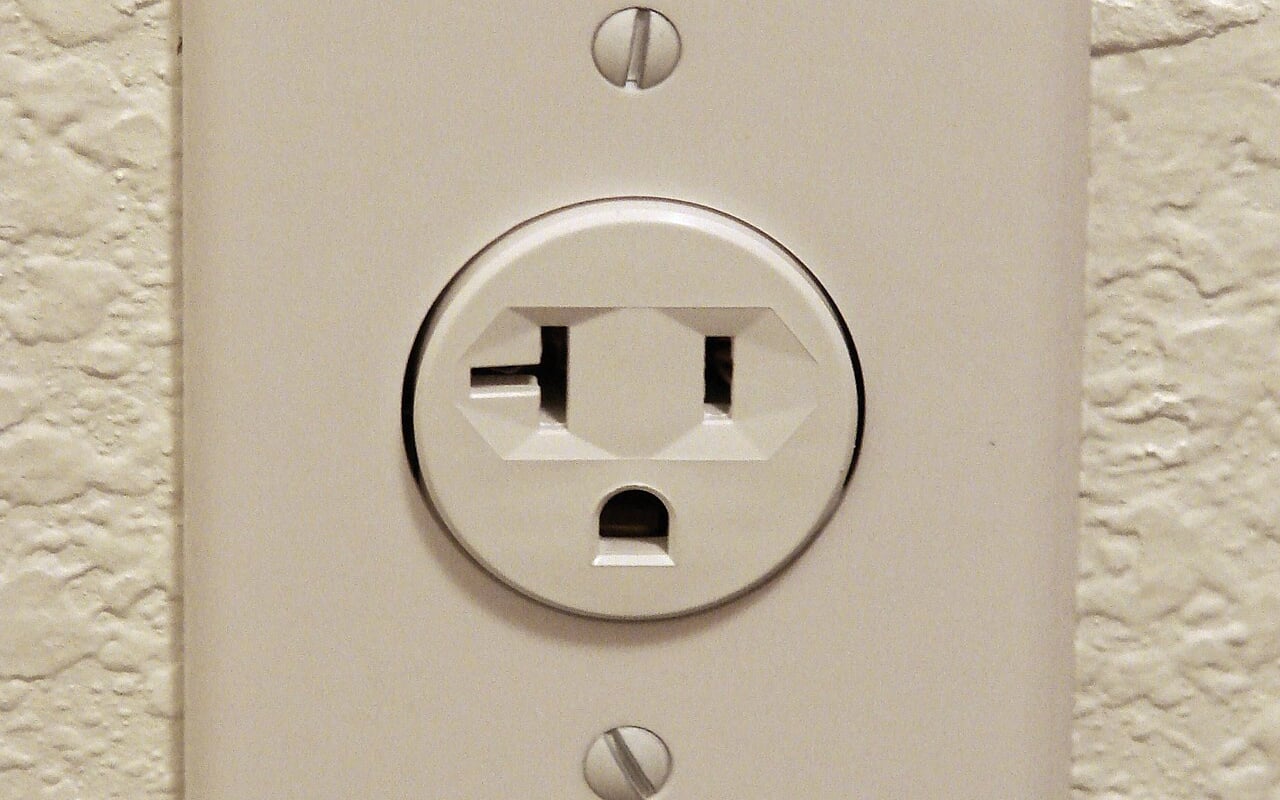
Look at the outlet face. Is it discolored, melted, or cracked? Are the slots (the holes the prongs go into) loose or stretched out? An outlet that looks burned or feels loose when you plug something in needs to be replaced immediately - even if it’s not the cause of your current problem, it’s a fire risk waiting to happen. If the faceplate feels warm or hot, read warm outlet or switch: when to worry and stop using that outlet.
Check adjacent outlets
Test the outlets on either side of the dead one and in the same room. If they all work, your problem is localized to that one outlet. If multiple are dead, the problem is further upstream - either at a wire connection somewhere between them or at the breaker itself.
When the outlet itself has failed
Outlets are mechanical devices. They wear out. Every time you plug something in and pull it out, the internal contacts flex a little. Over enough cycles - 10, 20, 30 years - those contacts lose their spring tension and stop making good contact.
The result: an outlet that looks fine, feels fine when you plug something in, but delivers no power.
Signs of a failed outlet
- The outlet feels loose when you insert and remove a plug
- Plugs fall out partially or won’t stay in
- You can see darkening or scorch marks around the slots
- The outlet is warm to the touch (even when nothing’s plugged in)
- The outlet is more than 20-30 years old - the brown two-prong kind with no ground hole. The two-prong outlets in older homes guide explains why grounding and GFCI protection matter before you upgrade.
A failed outlet needs replacement. This is one of those jobs that’s genuinely within reach of a confident DIYer, but only if you’re comfortable turning off the breaker and verifying the circuit is dead. If you’re not 100% sure, call an electrician. The replacement itself costs about $2 for a basic outlet, and a service call runs $150 to $300.
Wiring issues behind the wall
If you’ve checked everything above and the outlet is still dead, the problem is almost certainly a wiring issue somewhere between the panel and that outlet. This is where your safe-checks stop and an electrician takes over.
Common wiring causes
- Loose wire at the outlet or a junction box - a wire nut vibrated loose, or a wire pulled out of a back-stab connection (those little holes on the back of outlets that builders love and electricians hate)
- Damaged wire - a nail or screw through a wire in the wall, rodent damage in the attic or crawl space, or sheathing that’s degraded with age
- A failed connection in a junction box - buried behind drywall or in the attic, accessible only by cutting into the wall
- Aluminum wiring issues - if your home was built between 1965 and 1972, aluminum wiring can develop loose connections over time due to thermal expansion. This is a whole-house concern, not just one outlet, so start with aluminum wiring risks and replacement in older homes before treating it like a simple receptacle failure.
Safety rules you don’t skip
I’m going to say this as plainly as I can.
Do not stick anything metal into an outlet slot - even if you’re sure it’s dead. Do not open up the outlet box and start poking around with a screwdriver unless you have turned off the breaker and verified the circuit is dead with a voltage tester. Do not keep resetting a breaker that trips immediately - that’s not “trying again,” that’s telling yourself the problem will fix itself, and it won’t.
If you own a non-contact voltage tester (the pen-shaped tool that beeps when it senses voltage), you can safely test an outlet by holding the tip near each slot without touching metal. These cost $15 to $25 and are the only tool I recommend a non-electrician homeowner buy for outlet troubleshooting.
Do not use a multimeter unless you have been shown how to use one safely. I’d rather you call me than learn on YouTube. For a broader line between safe homeowner checks and risky electrical work, read what not to DIY with home electrical work.
When to stop and call an electrician
Call a licensed electrician when:
- The breaker trips immediately after you reset it
- You smell burning near the outlet or panel
- The outlet is warm, discolored, or visibly damaged
- Multiple outlets in the same area are dead
- You have aluminum wiring and are unsure what to do
- None of the checks above restored power and you’re not comfortable opening the outlet box
- The outlet is in a location exposed to water - outdoors, near a sink, in a crawl space or basement prone to flooding
- You hear buzzing or crackling from the outlet or wall
A typical diagnostic visit runs $150 to $300. If the fix is an outlet replacement, expect $200 to $400 with parts and labor. If it’s a wiring repair inside the wall, the cost goes up because it involves drywall work. For after-hours or urgent calls, compare those numbers with emergency electrician costs so the service fee does not catch you off guard.
What you can do right now
Here’s your action plan:
- Check every breaker in the panel - look for one that’s in the middle position
- Find every GFCI in the house and press RESET on each one
- Test every light switch in the room with a lamp plugged into the dead outlet
- Plug a different device into the same outlet
- Test the outlets on either side and in the same room
- If nothing works, call an electrician
Quick Answers
Q: My outlet stopped working but the breaker isn’t tripped. What’s the most likely cause?
A tripped GFCI feeding the outlet from another room, a half-hot outlet whose switch got flipped, or a failed outlet with worn-out internal contacts. In that order. Start with the GFCI hunt - it’s the most common cause and the easiest to fix.
Q: Can a dead outlet be a fire hazard?
It can be. An outlet that’s dead because of a loose connection can generate heat at the loose point - inside the wall or in the junction box - even if the outlet face feels cool. If you see any discoloration, feel any warmth, or smell anything like burning plastic, call an electrician immediately and turn off the breaker feeding that outlet until they arrive.
Q: How do I find which GFCI controls my dead outlet?
Press TEST on every GFCI in the house. The one that kills power to the dead outlet is the one feeding it. Press RESET on that same GFCI to restore power. If you can’t find it, note which outlets in which rooms are dead and call an electrician - they can trace the circuit in minutes with a toner tool.
Q: Is it safe to replace a dead outlet myself?
If you are comfortable turning off the breaker, verifying the circuit is dead with a non-contact voltage tester, and making secure wire connections under a screw terminal (not back-stabbing), yes. If any of that sounds intimidating, call an electrician. A $2 outlet is not worth a $50,000 hospital bill.
Q: Why is only one of the two outlets dead and the other works?
That’s a half-hot outlet. One receptacle is controlled by a wall switch, and the other is always on. Find the switch that controls the dead half. If you want both to be always on, an electrician can rewire the outlet - it usually takes 15 minutes.
Q: My outdoor outlet is dead. What should I check first?
Outdoor outlets are almost always GFCI-protected. Check the GFCI in the garage, basement, or another outdoor outlet on the same side of the house. Outdoor GFCIs trip more often than indoor ones due to moisture and temperature changes, so they’re the #1 suspect. Also check the breaker - outdoor circuits sometimes share a breaker with garage or basement outlets. If the cover, gasket, or box looks weather-beaten, use the outdoor outlet safety and weather covers guide before resetting it again.