Dimmer Switch Compatibility for LED Bulbs and Lights
Learn why LED bulbs flicker on old dimmers, how to match bulbs and switches, and when a dimmer upgrade is safer than troubleshooting alone.
Articles on this site may include sponsored content. If they do, it's labeled clearly - and it still has to answer a real homeowner question. Same bar as everything else here.
Dimmer Switch Compatibility Guide for LEDs
You bought dimmable LED bulbs, screwed them in, flipped the switch, and now your lights are doing a strobe-light impression at a bad house party. I get this call more often than you’d think, and the fix is almost never what people expect. Dimmer switch compatibility isn’t complicated, but it’s not intuitive either. Here’s the short version: you need three things to work together - a dimmable bulb, a modern LED-rated dimmer switch, and a total wattage that falls inside that dimmer’s sweet spot. Miss any one of those, and you’re getting flicker, buzz, or lights that just won’t cooperate.
Why Your New LEDs Are Flickering
You swapped out your old incandescent bulbs for LEDs because they use way less power and last longer. Good move. But that old dimmer switch on your wall? It was designed for a completely different animal.
Here’s the deal: old dimmer switches were built to handle the heavy electrical load of incandescent bulbs. Those bulbs pull a lot of power. LEDs pull almost nothing by comparison. So when your old dimmer tries to control a handful of LEDs, the electronics inside the switch don’t get enough electrical current to operate properly. The result is that telltale flicker, or a low hum, or dimming that skips from bright to nearly off with nothing smooth in between.
It’s not the bulb’s fault. It’s not really the dimmer’s fault either. They just weren’t designed to be together. If the problem is not limited to one dimmer-controlled fixture, step back and use flickering lights troubleshooting to decide whether the issue is the bulb, fixture, circuit, or utility side. If the noise is more of a hum from the switch or fixture, compare it with buzzing electrical sounds so you know when the symptom is bigger than bulb compatibility.
The “C-L” Label Is Your Friend
If your dimmer switch doesn’t have a C-L rating stamped on it somewhere, it’s not built for LEDs. C-L stands for CFL and LED, and that little marking tells you the manufacturer designed the switch to work with low-wattage bulbs. Most dimmers sold before about 2010 are standard incandescent-only. If yours is older than that, replace it. Full stop.
The Three Things You Absolutely Need
Dimmer switch compatibility comes down to three checklist items. Miss any one, and you’re gambling.
1. A Dimmable Bulb
Not all LED bulbs are dimmable. I know, it seems like they should be, but they’re not. Check the box or the bulb itself. It should clearly say “dimmable” in the fine print. If it doesn’t say dimmable, it’s not. Non-dimmable LEDs on a dimmer switch will flicker, buzz, or eventually fail.
And here’s a weird one: sometimes a dimmable LED from one brand won’t work well with a dimmer from another brand. That’s called a compatibility mismatch, and it’s more common than you’d expect.
2. An LED-Compatible Dimmer
Like I said above, if your dimmer is more than 10 years old, it needs to go. But even some newer dimmers aren’t great with LEDs unless they’re specifically labeled for them. Look for:
- C-L rated (the industry standard marking)
- LED compatible printed on the front or in the manual
- A brand like Lutron, Leviton, or Legrand that publishes compatibility lists
Don’t just grab the cheapest dimmer at the hardware store. Spend the extra $10-15 on a quality LED-rated model. It’s the difference between smooth dimming and years of annoyance. If you open the box and see brittle wiring, scorch marks, or heat damage, pause and use the warm outlet or switch warning signs guide before installing anything new.
3. The Right Wattage Match
This is the one almost everyone gets wrong.
A dimmer switch has a maximum wattage rating, usually 150W, 300W, 600W, or 1000W. But here’s the catch: that rating is for incandescent bulbs. When you’re using LEDs, you need to divide that number by 10.
So a 600W dimmer can only handle about 60 watts of LED bulbs. If you’ve got a chandelier with six 10W LED bulbs, that’s 60W total, right at the limit. Add a seventh bulb and you’re over.
This is called the “divide by 10” rule, and almost every dimmer manufacturer uses it. Ignore it at your own risk.
There’s also a minimum load to worry about. Most dimmers need a certain amount of wattage to function. If you only put one tiny 5W LED on a dimmer rated for a 25W minimum load, the dimmer won’t work right. The fix is either to add more bulbs or swap to a dimmer with a lower minimum rating.
Leading Edge vs. Trailing Edge Dimmers
If you want to sound smart at the hardware store, here’s the distinction: there are two types of dimmer switches, and they cut the power waveform at different points.
Leading edge dimmers are the old standard. They cut the beginning of each electrical cycle. They work great with incandescent and halogen bulbs, but they’re noisy with LEDs. You’ll hear a buzz or hum at lower levels. Most old dimmers in homes built before 2015 are leading edge.
Trailing edge dimmers cut the end of the cycle instead. They’re quieter, smoother, and much better suited to LEDs. If you’re buying a new dimmer for LED bulbs, trailing edge is what you want.
The good news? Most modern LED-rated dimmers on the market today are trailing edge. You don’t usually have to hunt for them. Just buy a current-model dimmer from a reputable brand and you’re set.
Smart Dimmers and the Neutral Wire Question
Smart dimmers, the kind you control from your phone or yell at via Alexa, add another wrinkle. Most of them need a neutral wire in the switch box to power their Wi-Fi or Bluetooth radios. And here’s the thing: a lot of older homes don’t have neutral wires in the switch box.
How do you know? If your current switch has only two wires connected (not counting the ground), you probably don’t have a neutral. If your switch has three or more wires, including a bundle of white wires tucked in the back, you’re in good shape.
If you don’t have a neutral wire, you still have options. A few companies make no-neutral smart dimmers that trickle a tiny current through the bulb instead. Lutron’s Caséta line is the most popular example. They work, but they cost more and have a shorter list of compatible bulbs.
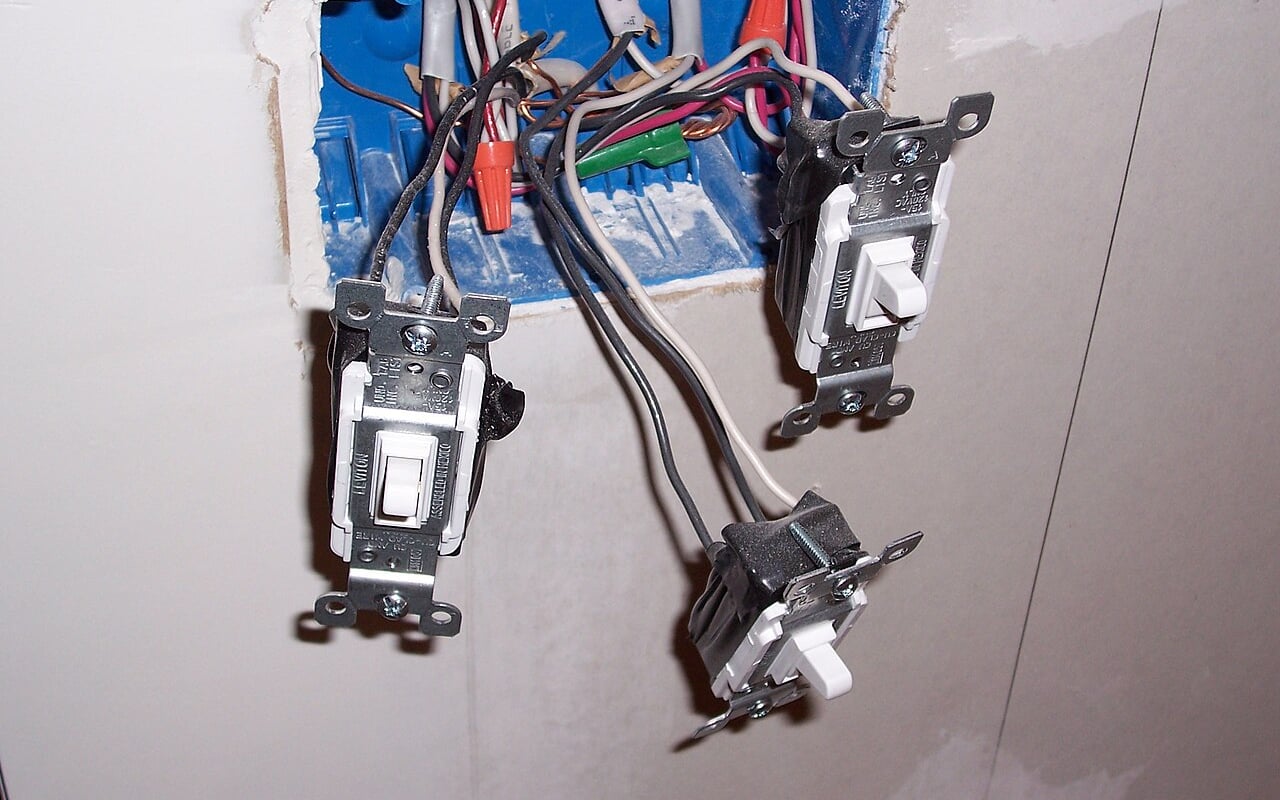
If you’re not sure what’s in your wall, snap a photo of the switch wiring before you go shopping. It’ll save you a trip back to the store. If the larger project involves app-controlled switches, read smart switches and neutral wires before buying a dimmer that may not work in your box. For any project where you are not comfortable opening the box safely, review electrical DIY safety first.
The Ghost Light Problem
Let’s talk about the creepiest dimmer issue: lights that glow faintly even when the switch is off. It’s called ghost lighting or LED ghosting, and it’s surprisingly common.
Why does it happen? A few reasons:
- The dimmer isn’t fully cutting the power. A tiny trickle leaks through to keep its internal electronics running
- The neutral and hot wires in your box are too close together and creating a small inductive current
- The dimmer’s minimum load is set higher than your bulbs’ total wattage
The fix depends on the cause. Sometimes swapping to a dimmer with a physical off switch (instead of a digital one) solves it. Sometimes adding a small load resistor fixes the circuit. In some cases, it’s just an incompatibility between that specific dimmer and those specific bulbs.
If ghost lighting bothers you, and honestly, it bugs the heck out of most people, try a different dimmer model first. That fixes it more often than not.
How Many LEDs Can One Dimmer Handle?
Let me walk you through a real-world example so you can do the math yourself. If this is part of a broader lighting layout, recessed lighting planning basics can help you think through fixture count before you pick the dimmer.
Say you have a living room with eight recessed LED can lights, and each bulb uses 9 watts. That’s 72 watts total. You find a dimmer rated for 600W incandescent. Apply the divide-by-10 rule: 600 ÷ 10 = 60 watts max for LEDs. Your 72W load is over the limit, even though 72W sounds tiny.
You need either:
- A dimmer with a higher incandescent rating (1000W ÷ 10 = 100W, plenty of room)
- Or a dimmer specifically rated for higher LED wattage (some newer models are rated 150W for LEDs outright)
Check the spec sheet. More and more dimmers now list both an incandescent max and an LED max. When in doubt, go by the LED number. If the project grows from a simple dimmer swap into new wiring, boxes, or fixture locations, check when electrical work needs a permit before you start.
What About CFL Bulbs?
CFLs are the middle child nobody talks about. They can technically be dimmed if the bulb says “dimmable CFL”, but the dimming range is terrible. Most CFLs only dim down to about 20-30% brightness before they flicker or shut off. And they take forever to warm up at lower levels.
My advice? Skip dimmable CFLs entirely. If you’ve got a fixture you want to dim, use dimmable LEDs. The price has come down so much that there’s no reason not to.
A Quick Word on Three-Way Circuits
If you have two switches controlling the same light, one at each end of a hallway or staircase, that’s a three-way circuit. Not every dimmer works in this setup. You need a special three-way dimmer, or a dimmer designed to pair with a standard three-way switch on the other end.
Lutron makes this easy with their Maestro line: you put one dimmer at the primary location and a matching companion switch at the other. No extra wiring needed. If you’re planning a three-way dimmer installation, buy the matching pair at the same time. Mixing brands rarely ends well. Similar wiring questions come up with fans, so the ceiling fan installation questions guide is worth reading before you combine lighting controls, fan controls, and older switch legs.
Quick Answers
Q: Can I use a dimmable LED bulb in a regular (non-dimming) socket?
Yes. Dimmable LEDs work perfectly fine on a standard on/off switch. They just run at full brightness. The dimmable feature only activates when they’re connected to a dimmer.
Q: What happens if I use a non-dimmable bulb on a dimmer switch?
Don’t do it. Non-dimmable LEDs on a dimmer will flicker, buzz, overheat, and eventually burn out early. In some cases they can fail in a way that damages the dimmer too. Stick with dimmable bulbs only.
Q: Do all smart dimmers need a neutral wire?
No, but most do. Lutron’s Caséta line works without a neutral. A few other brands have no-neutral options too. That said, a neutral wire gives you way more choices and a better selection of features. If your house has neutrals in the switch boxes, you’re set.
Q: My lights buzz when dimmed. Is that dangerous?
Probably not dangerous, but definitely annoying. Buzzing usually means the dimmer and bulb aren’t electrically compatible. Try swapping one or the other. If the buzzing is coming from the dimmer itself (not the bulb), the dimmer may be overloaded or failing. If you decide to bring someone in, use these electrician hiring questions to make sure the scope is clear before work starts.
Q: Can I use the same dimmer for LEDs and incandescent bulbs on the same circuit?
Most LED-rated dimmers allow it, but there’s a catch. You need to calculate the total load based on both bulb types. Use the incandescent rating for the incandescent bulbs and the divide-by-10 LED rating for the LEDs. If you’re unsure, stick to all one bulb type per dimmer.
Q: Why do my LED lights glow faintly when the switch is off?
That’s ghost lighting, covered in detail above. It usually means the dimmer is passing a tiny amount of current even in the off position. Try switching to a dimmer with a mechanical off switch, or look for one with a lower minimum load spec.
Q: What’s the best dimmer brand for LEDs?
Lutron is the gold standard for LED dimming. Their LED+ line and Maestro dimmers are tested against hundreds of bulb models, and they publish compatibility lists online. Leviton and Legrand make solid options too. Whatever you buy, stick with a major brand. Cheap off-brands are a gamble with LEDs.