Where to Put an EV Charger at Home: Best Locations
Choosing where to install an EV charger at home? Chris Lee explains garage, driveway, carport, and exterior options plus the electrical planning that matters.
Articles on this site may include sponsored content. If they do, it's labeled clearly - and it still has to answer a real homeowner question. Same bar as everything else here.
Where Should You Put an EV Charger?
You bought the EV. Or you’re about to. And now you’re standing in your garage - or your driveway, or your carport - staring at the wall, trying to figure out where the charger goes.
It’s a good problem to have. Home charging is the single best quality-of-life upgrade you can make as an EV owner. Plug in when you get home, wake up to a full battery every morning. No gas stations. No waiting. No range anxiety.
But here’s the thing most people don’t realize until they start planning: where you put the charger matters - a lot. Pick the wrong spot and you’re dealing with tripping hazards, cable management headaches, unnecessary electrical costs, or worse - a charger that’s awkward to use every single day.
I’ve helped dozens of homeowners map out their EV charging setups, and I’ve seen the mistakes firsthand. Let me walk you through how to get the location right the first time.
The Golden Rule: Put It Where You Park
This sounds obvious, but you’d be surprised how many people overthink it. The best location for your EV charger is the spot where your car sits most of the time - not where you think it should sit, and not where it looks nicest.
Pull into your driveway or garage like you do every day. Stop exactly where you normally stop. Get out and look at which side of the car the charge port is on - driver side or passenger side, front, rear, or side. That’s your starting point.
A Level 2 charger typically has a cable between 18 and 25 feet long. That’s enough reach for most parking situations, but you shouldn’t count on the full length. You want the charger mounted close enough that the cable reaches the port without stretching, draping across the hood, or lying on the ground where someone can trip over it.
Garage Installation: The Gold Standard
If you have a garage, this is almost always your best option. It’s sheltered from weather, close to your electrical panel (usually), and keeps the charger and cable out of sight.
Mounting on the Side Wall Next to Your Parking Spot
This is the classic setup. Mount the charger on the wall next to where the charge port sits when you’re parked. If your port is on the driver-side front, mount the charger on the front driver-side wall. Simple.
Make sure the charger is mounted at a comfortable height - typically 40 to 48 inches off the floor, about the same as a light switch. Too low and the cable drags. Too high and you’re straining to reach the connector.
Mounting on the Ceiling or Overhead
This one’s less common, but it’s a great option if you park in a two-car garage and want to reach either vehicle. An overhead cable management system lets the charger hang from the ceiling with a retractable coil. It keeps the cable completely off the floor and out of the way.
The tradeoff: it’s more expensive to install, and not all chargers are designed for ceiling mounting. Check the manufacturer’s specs before you go this route.
Between Two Parking Spots
If you have a two-car garage and both vehicles are EVs (or will be soon), consider mounting the charger on the back wall centered between the two parking spots. With a 25-foot cable, you can reach either car’s port without moving the charger. Just make sure you have a cable management hook on each side to keep the cable tidy when it’s not in use.
Driveway Installation: Best for Outdoor Parkers
No garage? No problem. Many EV owners park in the driveway, and a well-placed outdoor charger works great.
Mounting on the Exterior Wall
If your driveway runs alongside your house, the easiest option is mounting the charger on the exterior wall closest to where you park. Use a weatherproof, NEMA 3R or NEMA 4-rated charger designed for outdoor use. Most modern Level 2 chargers are outdoor-rated, but always check before buying. The same weather logic shows up in the outdoor outlet safety guide.
Mount the charger high enough to clear snow accumulation if you live in a winter climate - at least 24 inches above grade. Make sure the cable can reach the charge port without lying across a walkway or driveway where someone could trip or drive over it.
Pedestal or Post Mount
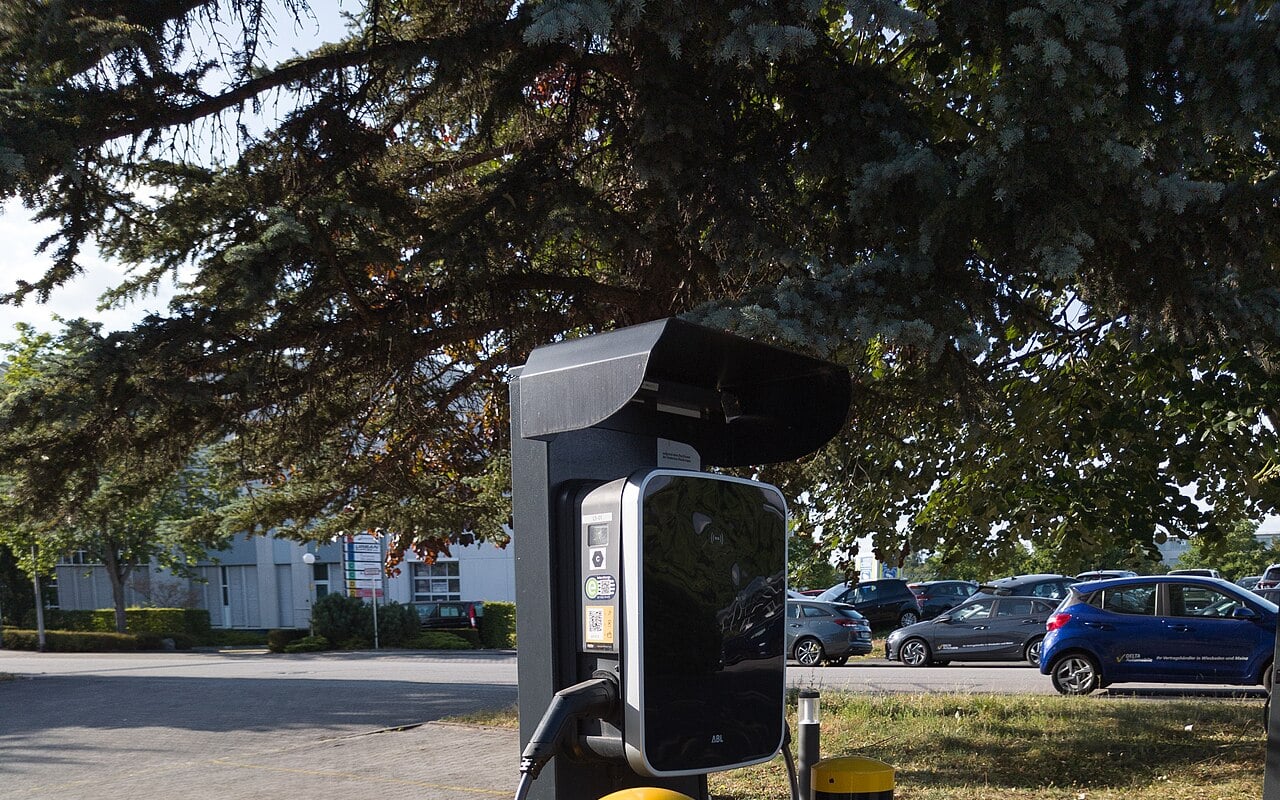
If the nearest wall is too far from where you park - or if you want a cleaner look - a pedestal mount is your answer. The charger mounts on a 4x4 post or metal pedestal installed in the ground next to your parking spot.
This is a great solution for corner lots, side driveways, or wide driveways where the house is set far back. Just make sure the pedestal is set in concrete and placed where it won’t get hit by a car pulling in or out. A parking stop or wheel chock can help keep drivers consistent.
Considerations for Driveway Charging
A few things to keep in mind if you’re installing outdoors:
Cable protection. A cable lying across the driveway will eventually get run over. Use a cable ramp or cut a channel in the concrete (with a pro’s help) to recess the cable. Or position the charger so the cable never crosses the driving path.
Weather. Rain, snow, ice, and UV exposure all affect your charger over time. Outdoor-rated units are built to handle it, but cable covers and weather boots can extend their life.
Tripping hazard. Keep the cable routed along the edge of the driveway or tucked against the house. Don’t let it snake across walking paths.
Carport Installation: The Best of Both Worlds
A carport gives you covered parking without the full enclosure of a garage. It’s a solid middle ground.
You can mount the charger on a support post or on the carport wall closest to your charge port. Since the carport already has a roof, you’re protected from direct rain and snow. Most outdoor-rated chargers will handle carport conditions just fine.
One tip: if your carport has a concrete floor, consider running conduit below the slab before you mount the charger, or use surface-mount raceway on the post. That keeps the wiring neat and protected.
Side-of-House Mounting: The Stealth Option
If you want the charger out of sight from the street but still convenient to the driveway, the side of your house works well. Just make sure the cable can reach your car without crossing walking paths or landscaping.
This works especially well if you have a narrow side yard or a gate between the house and fence. Mount the charger on the house wall, and position your car so the charge port faces that side. A lot of homeowners use this setup for second cars parked in tandem.
Key Electrical Considerations Before You Pick a Spot
You don’t need to be an electrician to plan your charger location - but you should understand a few basics before you commit.
Distance to Your Electrical Panel
The farther your charger is from your main panel, the more expensive the installation. Running 240-volt cable through finished walls, under floors, across attics, or through crawl spaces adds up fast.
If you have a choice between mounting the charger closer to the panel vs. closer to your car’s charge port, go with closer to the panel. A longer cable is cheaper than a longer electrical run.
Available Panel Capacity
Most homes built before 2020 have a 100-amp or 200-amp service. A Level 2 charger draws 32 to 48 amps - that’s a significant chunk of your available capacity. If you’re not sure how service size changes the math, the 100-amp vs. 200-amp panel guide is the next read. Your electrician will need to do a load calculation to make sure your panel can handle the charger plus your existing loads (HVAC, appliances, lighting, etc.).
If your panel is already close to capacity, you may need a panel upgrade or a load management device that lets the charger share capacity with other loads. The same dedicated-load thinking applies in the dedicated circuits guide. If you’re trying to size the budget, the electrical panel upgrade cost guide gives the bigger picture before you decide on location.
Once the location looks workable, the EV charger installation walkthrough shows how the site visit, wire route, permit, and inspection usually fit together.
Permits and Inspections
I mentioned this in the EV charger permits and inspections guide, but it’s worth repeating here: EV charger installations require a permit in almost every jurisdiction. For the broader homeowner rule, see when electrical work needs a permit. Your electrician should handle this. Make sure they do.
Conduit or Direct Burial
If you’re running wire underground to reach a pedestal-mounted charger in the driveway, you’ll need UF-rated cable in conduit, or direct-bury rated cable at the correct depth (typically 18 to 24 inches). This is a job for a licensed electrician - not a weekend project.
Future-Proofing Your Location
Think ahead. Are you planning to buy a second EV? Does your spouse park on the other side of the garage? Will you move and want to take the charger with you?
If the answer to any of these is yes, consider these strategies:
Install conduit even if you don’t need it now. A stub of empty conduit from the panel to your charger location makes it easy to upgrade to a bigger charger or add a second one later without tearing up walls.
Choose a charger that can be relocated. Some chargers can be uninstalled and reinstalled at a new location more easily than others. Hardwired units are cleaner but harder to move. Plug-in units with a NEMA 14-50 outlet are easier to relocate.
Install a dual-charger setup if you can. Some newer chargers support load sharing - two units on one circuit that talk to each other and split the available power. This is the cleanest way to support two EVs without a panel upgrade.
Quick Answers
Q: Is it better to install the EV charger inside the garage or outside?
Inside is better if you have the option - it keeps the charger out of the weather and avoids tripping hazards. But outside works great with a weatherproof charger and proper cable management. Pick whichever matches where you park.
Q: Can I install an EV charger on a detached garage?
Yes, but the cost is higher. You’ll need to run a new circuit from your main panel to the detached garage, either underground or overhead. That can add $500 to $2,000 to the installation depending on distance and trenching complexity.
Q: How far can the charger be from the electrical panel?
Technically, as far as you want - but voltage drop becomes a concern beyond 100 to 150 feet. Your electrician will size the wire accordingly (thicker wire for longer runs). The bigger concern is cost: long runs require more wire, more labor, and more conduit.
Q: Do I need a 240V outlet or can the charger be hardwired?
Both are valid. Hardwiring is slightly cleaner and more reliable - one less connection point to loosen or arc. Plug-in (NEMA 14-50) is easier to move later. I recommend hardwiring for permanent installations and plug-in if you might relocate the charger.
Q: What if I park on the street?
Street parking makes home charging harder, but not impossible. You’d need a charger mounted on a pedestal near the curb or a parking post, with the cable running across the sidewalk. Check local regulations - some cities have rules about cables crossing sidewalks. You may need a cable cover or trench.
Q: Should I buy a charger with a longer cable to reach farther?
Longer isn’t always better. A 25-foot cable is standard and sufficient for most setups. Longer cables (30+ feet) are heavier, harder to coil, and more expensive. It’s better to mount the charger closer than to rely on cable length.
Q: Can I share one EV charger between two cars?
Yes - with a load-sharing setup. Two chargers share one circuit and automatically split the available power. Both cars charge slower simultaneously, but they charge. Some chargers also support “one cable, two connectors” designs, though they’re less common.
Q: Does the charger need its own dedicated circuit?
Yes. Every Level 2 EV charger should be on a dedicated 240-volt circuit with the correct amperage for that charger (typically 40, 50, or 60 amps). No sharing with other outlets or appliances. This is code.